


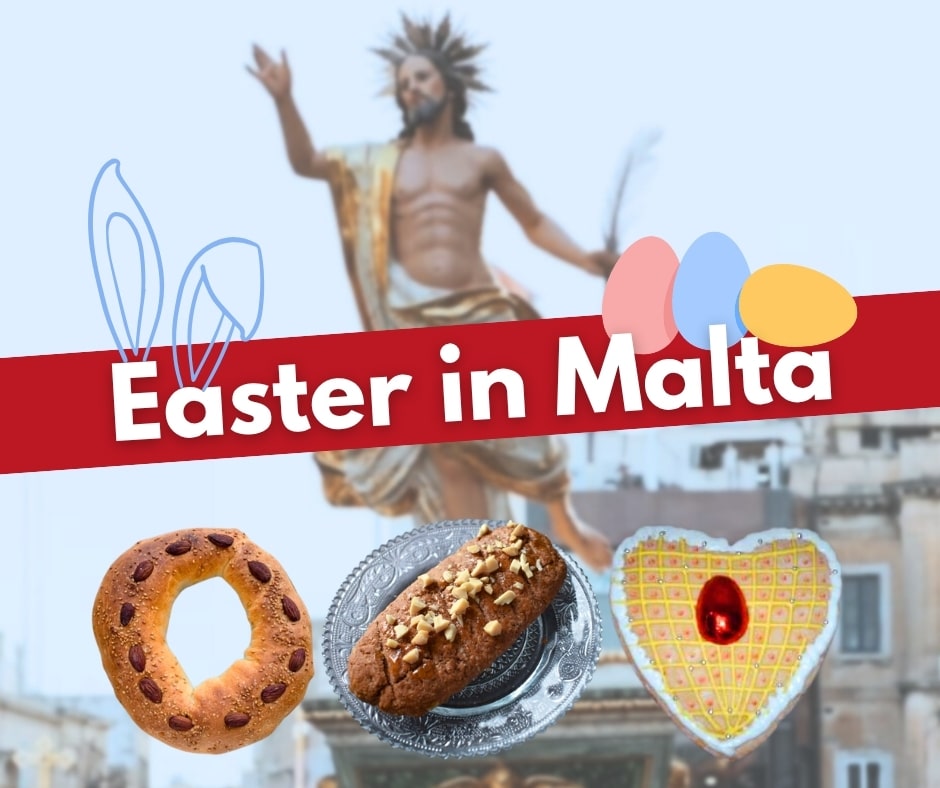
Easter is an important holiday in Malta, celebrating the resurrection of Jesus Christ. The English word Easter comes from the Old English Ēastrun, Ēastron, or Ēostre. In the 8th century, an English monk, Bede, recorded that Ēosturmōnaþ (‘Month of Ēostre’) was named after a goddess, in whose honour feasts were celebrated in April.
In Maltese, Easter is called “Il-Ħolma tal-Mewt u r-Riżurrezjoni” (The Dream of Death and the Resurrection), though people usually say “L-Għid” (Easter). Although Good Friday is the only official public holiday during Easter in Malta, commemorating Jesus Christ’s crucifixion, many people take extra days off to enjoy Easter traditions and spend time with family.
Holy Week in Malta
Holy Week in Malta is rich in tradition. While most of the Christian world begins Holy Week on Palm Sunday, in Malta it starts on the Friday of the Mater Dolorosa, the Friday before Good Friday. This feast has been important to the Maltese for centuries. All parishes hold processions in honour of Our Lady of Sorrows, and people decorate windows with small statues and draperies to create shrines of the Crucifixion. Illuminated crosses hang from balconies, and flags line the streets. During Holy Week, some towns perform Passion Plays depicting Jesus’ life and resurrection. Communities also sometimes hold fairs or markets featuring crafts and Easter sweets.
On Good Friday, the streets of Malta turn into a big stage. Many parishes mark the Passion with impressive processions, as statues of Jesus Christ move through the narrow streets, followed by other figures, including the Mater Dolorosa. These processions often include devotees dressed as Roman soldiers or biblical figures, hooded penitents walking barefoot, sometimes with chains, brass bands playing slow funeral marches, and silent crowds watching as the statues pass.
What People Do in Malta at Easter
Many Maltese people attend church Masses and join joyful processions with statues of the Risen Christ. Families meet to share meals and visit relatives, while children enjoy Easter egg hunts.
One of the most popular Easter celebrations on the island takes place in Birgu on Sunday morning, when large crowds gather for the traditional run with the statue of the Risen Christ. The statue is carried quickly through the cheering streets, symbolising Christ’s victory over death and hope for all.
This tradition is believed to have begun during British rule when processions were subject to time limits, and the final part was completed in a run to avoid fines. By the first half of the twentieth century, the custom was well established, and in 1935, the Regional Council of Malta even attempted to ban runs with religious statues. After the Second World War, the tradition resumed and continues to this day.
Food at Easter in Malta
Food plays a central role in Maltese Easter celebrations. Traditional treats include:
- Figolla – A sweet pastry filled with almond paste, usually shaped like an Easter symbol such as a rabbit, lamb, or heart. The pastry is covered with icing or chocolate, often topped with a small Easter egg. Figolli are perfect for sharing with family and friends.
- Kwarezimal – Also called Lenten cookies, these biscuits are traditional during Lent. Made from ground and chopped almonds, honey, and spices, they have a slightly spicy flavour and are widely available across Malta during Easter.
- Qaghaq tal-Appostli – A ring-shaped soft bread associated with Good Friday, topped with sesame seeds and almonds. Traditionally eaten with butter and cheese, it is enjoyed by Christians observing the Good Friday fast.
- Roast lamb with potatoes and vegetables – The traditional main meal for Easter Sunday.
- Chocolate eggs – Popular with children and often used in Easter egg hunts.
Easter Vocabulary
- Resurrection – Coming back to life
- Crucifixion – The execution of Jesus by being nailed to a cross
- Procession – Religious parade
- Shrine – A holy or sacred place dedicated to a saint or religious figure
- Passion Play – Play about Jesus’ life and death
- Mass – Religious service

For more information about our services, contact the inlingua Malta team at info@inlinguamalta.com